 SKIBDRIP®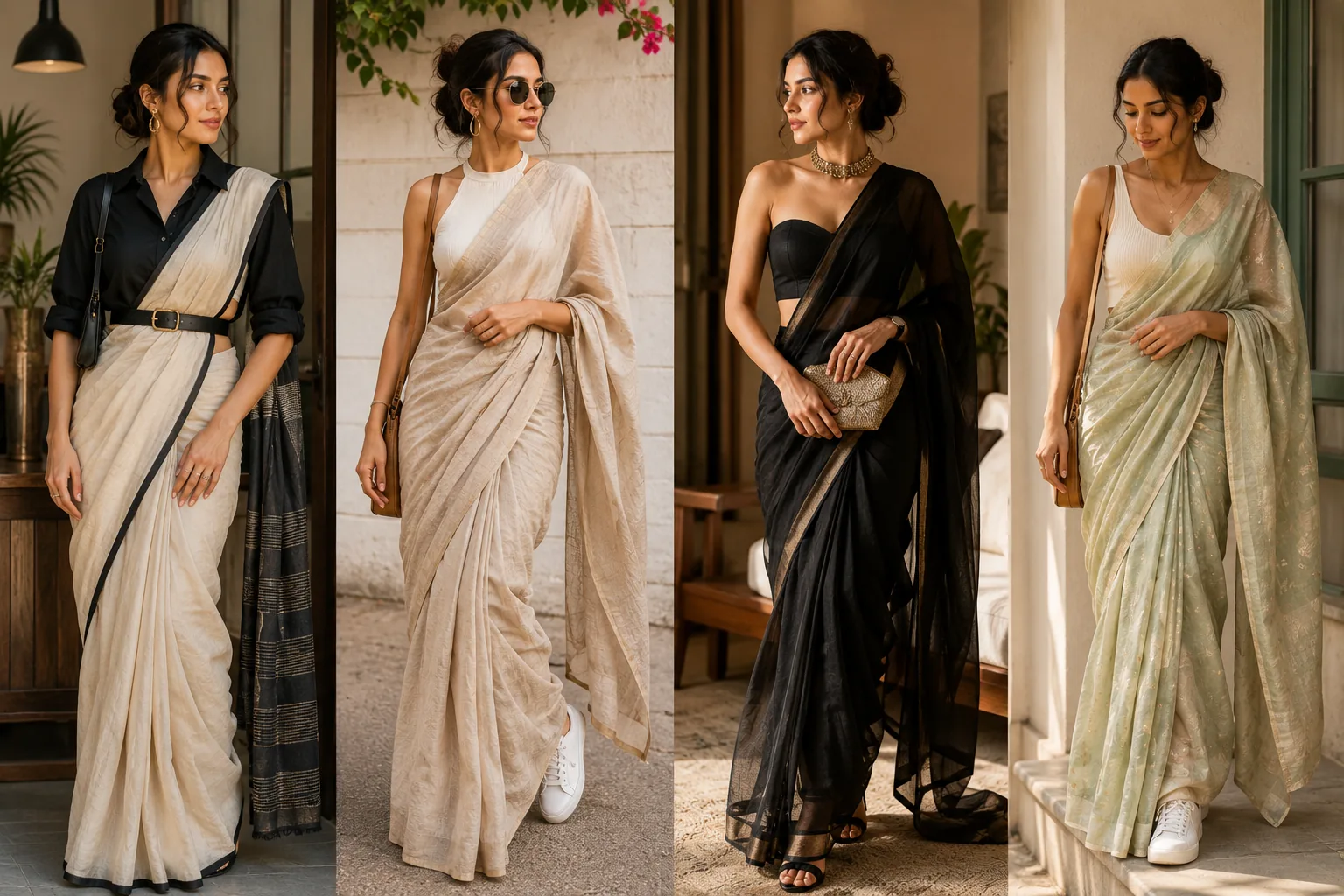
Change the drape before you buy anything
The fastest modernisation is free. Take the classic nivi drape — pleats at the front, pallu over the left shoulder — and sharpen it: five narrow pleats instead of eight loose ones, the pallu pinned flat so it falls clean to the knee. That alone reads contemporary.
From there, borrow with intent. The Gujarati seedha pallu, brought forward over the right shoulder, turns the pallu into the centrepiece — beautiful when the border is worked and the blouse is plain. A trouser drape, tucked over cigarette pants, frees your stride for a long event and needs no petticoat at all. Practise any new drape twice at home before its debut; a saree that needs constant adjusting stops looking modern by the second hour of the evening.
Let the blouse do the heavy lifting
The saree carries the tradition; the blouse is where the century shows. Swapping out the matching set changes everything:
- A crisp white shirt, collar open, cuffs folded — makes a cotton or chiffon saree office-ready
- A high-neck, full-sleeve blouse in a contrast solid — quietly architectural under a plain drape
- A square-neck or halter blouse for evenings, letting the drape frame the shoulders
- A fitted dark tee under handloom cotton for the most casual version
Fit matters more than novelty: shoulder seam on the bone, no gape at the armhole, a length that meets the petticoat without strain. A good local tailor will copy any silhouette from a photo for a few hundred rupees — the same one-swap logic behind mixing Indian and western pieces, applied at the blouse.
Belt the pallu like you mean it
Cinching the pallu does three jobs at once: it holds the drape through dancing and dinners, defines the waist, and reads instantly current.
A slim leather belt in tan or black suits cotton and linen sarees; a metallic or fabric belt sits better on silk and georgette. Place it at the natural waist, over the pallu, and let the pleats fan below it. If a western belt feels abrupt on a traditional weave, reach for the kamarbandh instead — the waist chain was doing this exact job long before belts arrived, and it keeps heirloom silks entirely within their own vocabulary. Either way, belt once, check the mirror, and resist the urge to add a second cinch anywhere else.
Match the modernising to the saree
Not every saree wants the same treatment. Everyday cottons, mulmul and linens take the boldest experiments — sneakers, shirts, a denim jacket dropped over the shoulders on a cool evening. Chiffons and georgettes suit the belt and the sleek minimal blouse.
Heirloom Banarasi and kanjeevaram deserve a lighter hand: keep the drape classic and modernise the frame instead — a sculptural blouse, one contemporary earring, a low sharp bun. The weave is the statement, and competing with real zari is a losing game. A trending drape will date in three seasons; a beautifully fitted blouse on a serious weave will not. That is why the safest money in saree styling always goes to the tailor, not the trend.
Finish at the feet and ears
Footwear sets the register. Block heels are the safe modern default — stable on lawns, clean under pleats. Flat kolhapuris keep a cotton saree honest for daywear. White sneakers under a mulmul or linen saree is a genuine look, not a stunt — keep the hem at the ankle so the shoe shows deliberately.
Then edit the jewellery to one hero: oversized jhumkas with a bare neck, or a statement necklace with plain ears — the full logic sits in pairing jewellery with ethnic wear. Carry a structured sling or a potli rather than a tote. Modern saree styling is subtraction: one twist, executed cleanly, and the confidence to stop there.