 SKIBDRIP®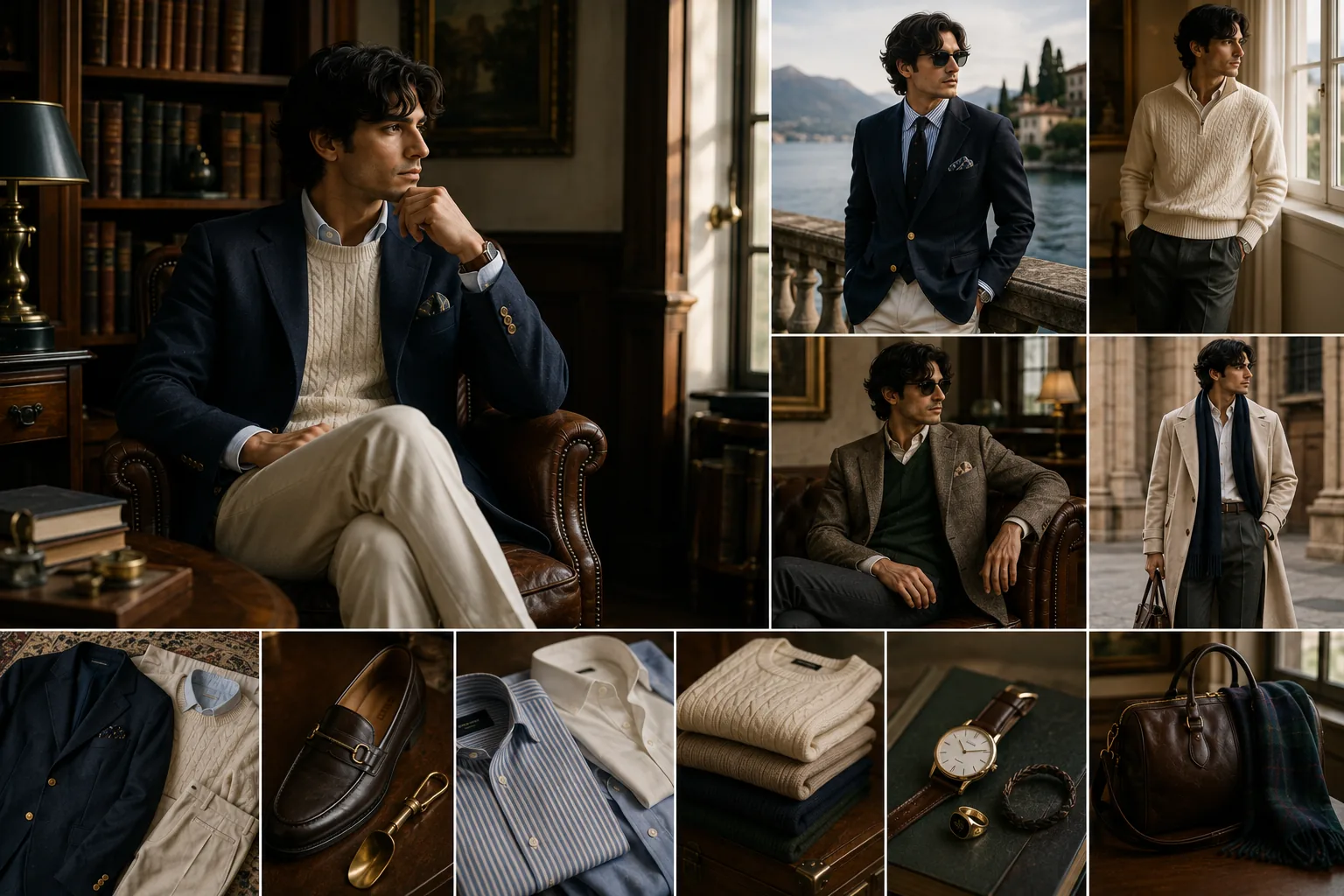
What it actually references
The moodboard is specific: Ivy League quadrangles in the 1950s, European aristocrats at the races, Riviera summers, tennis whites, tweed on damp lawns. The aesthetic borrows the dress codes of families whose money is old enough to be silent — clothes bought for decades, chosen for correctness rather than impact.
It is also, importantly, a mediated fantasy. Ralph Lauren spent fifty years selling this exact dream to people outside it, and the films and series the moodboards quote were always costume design. When the look surged on social platforms around 2022-23, Gen Z was reviving a revival — aspiration wearing nostalgia's clothes.
Knowing that does not spoil it. It clarifies what you are actually buying: a grammar of polish, not a genealogy.
The wardrobe codes
The pieces are remarkably stable across a century, which is much of the appeal:
- Navy blazer — soft-shouldered, plain buttons, the aesthetic's capital city
- Cream and camel knits — cable crewnecks, merino polos, the jumper over the shoulders
- Crisp shirts — white and pale-blue poplin or oxford, pressed
- Tailored trousers and chinos — mid-rise, clean drape; skirts pleated or A-line at the knee
- Loafers and minimal leather shoes — polished, resoled, never chunky
- Discreet jewellery — pearl studs, a thin chain, a plain good watch
- Palette: navy, cream, camel, forest, burgundy, grey
Everything fits precisely, nothing shines, and no logo appears anywhere. The look whispers on purpose.
Old money versus quiet luxury
The two aesthetics are cousins, constantly confused, usefully distinguished.
Quiet luxury is contemporary and minimal — fluid modern silhouettes, all signal carried by fabric and cut, at home in a glass office. Old money is nostalgic and coded — its blazers, club stripes and pleats point backwards to specific institutions and pastimes; it is at home on an imagined lawn.
In practice: quiet luxury is a standard you can apply to any wardrobe, while old money is closer to a genre, with costume risk if worn wholesale — full cricket-jumper-and-boater commitment reads as fancy dress.
The blend most people actually want: quiet luxury's discipline as the base, one or two old-money accents — the navy blazer, the loafers — for warmth and reference.
The Indian old-money wardrobe
India has its own old money codes, and they need no import licence. Established wealth here has always dressed the same quiet way: superb handloom cotton and linen in summer, an inherited Banarasi or Kanjeevaram brought out for weddings rather than bought for them, pearl studs, a plain gold chain worn thin with years, a bandhgala cut by a family tailor, chikankari so fine it reads as texture.
The grammar is identical — heritage over trend, fabric over logo, repair over replacement — only the garments differ. A crisp white kurta with polished sandals and one heirloom piece is as fluent a sentence in this language as any navy blazer.
If the aesthetic appeals, start from the version your own cupboard and family album already speak.
Copy the habits, not the trust fund
The satisfying irony: actual old money is famously unacquisitive. The habits behind the look are available to anyone, and they are the substance of it.
Buy rarely, buy quality you have verified, keep for decades. Repair as ritual — resoling, rewaeving, replacing buttons; visible age on a maintained garment is the whole flex. Press everything; polish shoes; the upkeep is the luxury. Fit precisely — the family-tailor effect costs a few hundred rupees at any alteration shop. Underdress the logo era — restraint now reads as confidence almost everywhere.
Do this with a modest wardrobe and you have captured what the moodboards are actually admiring — care, compounded over years. The lawn is optional.