 SKIBDRIP®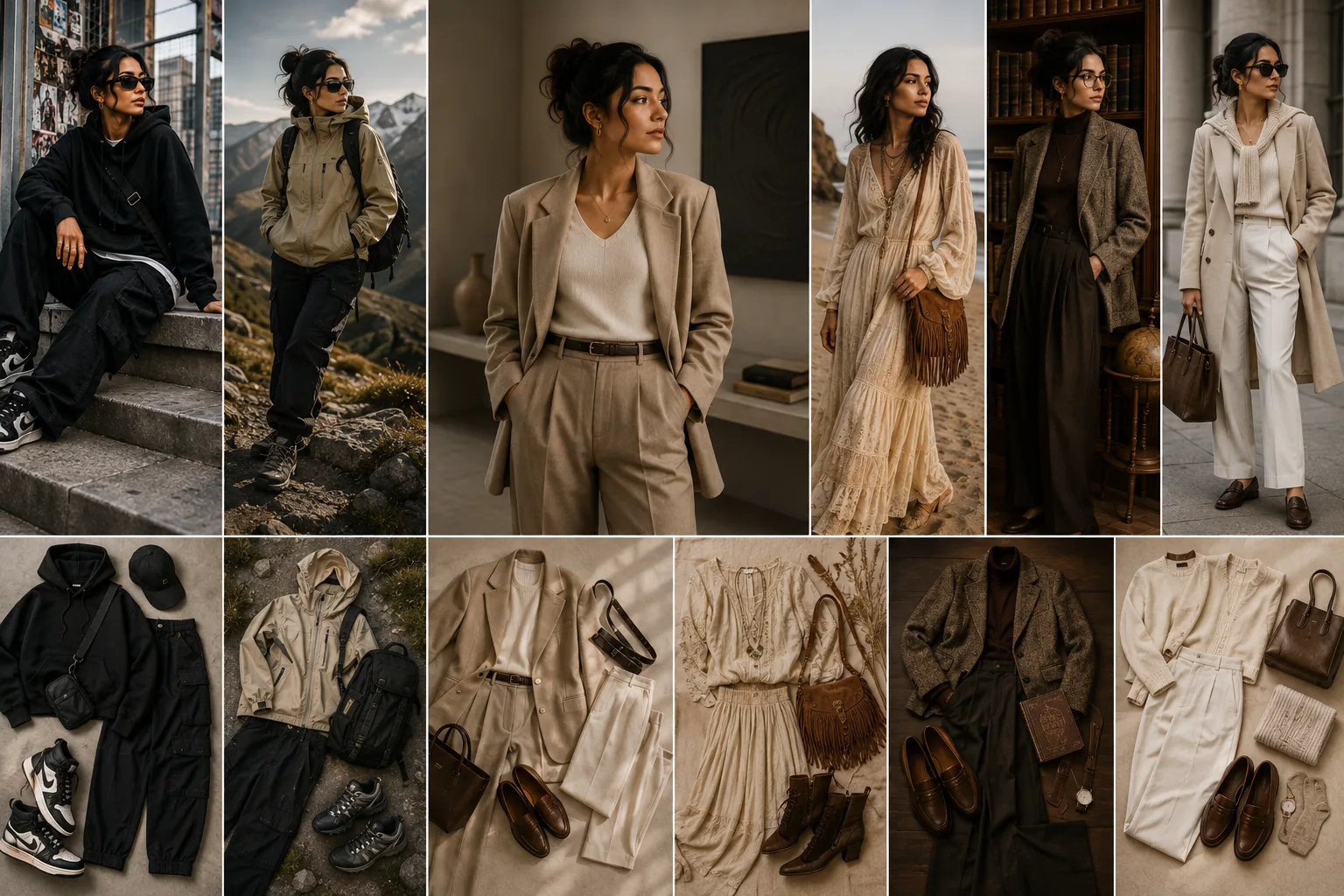
Aesthetics are moodboards, not memberships
An aesthetic, in the 2026 sense, is a named cluster of visual references — palette, silhouettes, textures, an implied lifestyle — that algorithms can sort and feeds can serve. The suffix era that gave us cottagecore and gorpcore turned dressing into a taxonomy, and every season mints new entries while quietly retiring last year's.
Useful, if handled correctly. An aesthetic hands you a ready-made palette and reference library, which is genuinely valuable when your own style is still forming.
The error is treating one as an identity to be purchased in full. Aesthetics are lenses to look through, not boxes to live in — the vocabulary matters, the membership does not. Learn the map, then travel across it lightly.
The polished cluster: quiet luxury, old money, minimalism
Three related looks dominate the refined end of 2026.
Quiet luxury — logo-free clothes whose quality shows in fabric and cut: camel, ivory, grey, navy; cashmere, dense cotton, fluid tailoring. Post-2023 it has settled from trend into a default grammar of dressing well.
Old money — the nostalgic cousin: navy blazers, cream knits, crisp shirts, loafers, tennis-club and heritage references. More costume-adjacent, more romantic.
Minimalism — the structural discipline underneath both: tight palette, clean lines, nothing decorative that is not doing work.
The shared appeal is calm and competence. The shared risk is beige anonymity — polish without personality reads as a very expensive shrug.
The street and the trail: streetwear, gorpcore, workwear
The casual end is equally settled and equally evolved.
Streetwear in 2026 is post-hype: the drop-queue frenzy has cooled, but the grammar — graphic tees, hoodies, sneakers, relaxed fits, reference-heavy graphics — is now simply how a large share of the world dresses. Fluency matters more than freshness; the culture rewards knowing what you are wearing and why.
Gorpcore keeps technical outdoor gear in city rotation — shells, trail runners, fleece, carabiner-clip practicality — pitched as function worn as fashion.
Workwear rounds out the cluster: chore jackets, carpenter trousers, heavy canvas and denim, built-to-last romance. All three trade on authenticity claims; all three reward actually using the pockets.
The romantic and the nostalgic wings
Opposite the polish and the function sit the feeling-led aesthetics.
The boho revival — fluid maxi skirts, suede and fringe, artisan and handloom textures — returned through the 2025 runways and remains strong in 2026, softer and less costume-heavy than its 2010s ancestor. Indian wardrobes hold a home advantage here: block prints, mirror work and handwoven cotton are the originals the moodboards are quoting.
Dark academia persists as the bookish register — tweed, knit vests, pleats, oxblood and forest tones.
Y2K is in afterglow: its low rises and baby tees fading with younger cohorts, its metallics and sport sunglasses absorbed into the general vocabulary. Nostalgia cycles keep rolling; the twenty-year rule now points squarely at the late 2000s. Choose the era that flatters you, not the one trending hardest this week.
Using an aesthetic without being consumed by it
The working method has three rules.
Sample, do not convert. Take an aesthetic's palette or one signature texture and run it through clothes you already understand — quiet luxury's restraint on your existing silhouettes, boho's suede as one jacket rather than a persona.
Blend two. Nearly everyone who looks interesting is running a pair — minimal plus workwear, old money plus streetwear, boho plus tailoring. The blend is where a borrowed look becomes a personal one.
Keep your base constant. Your fits, your colours near the face, your level of polish stay fixed; aesthetics rotate through as accents. Moodboards make excellent guests and terrible landlords.