 SKIBDRIP®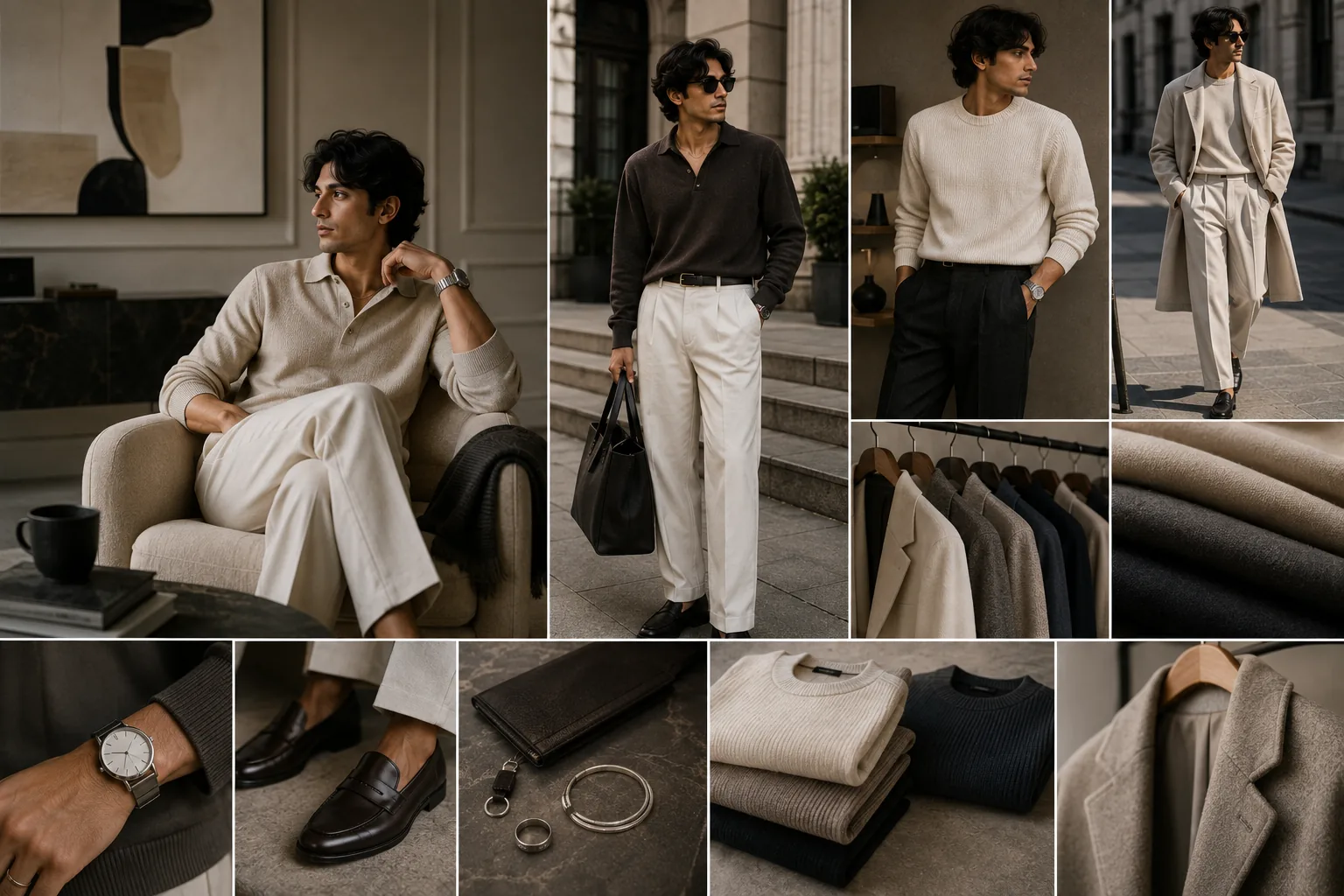
Where the phrase came from
The idea is old money's oldest habit — wealth that does not announce — but the phrase went mainstream in 2023, when Succession put the world's richest fictional family in unbranded knits and a baseball cap that cost more than a laptop, and stealth wealth became a search term.
The reference points were houses like The Row and Loro Piana and the quiet Italian mills behind them: clothes where all the money sits in cloth and cut, none in signage. One character's sneer at a garishly logoed bag — ludicrously capacious — became shorthand for the whole worldview.
By 2026 the discourse has moved on, but the look has not. It stopped trending and started being assumed — which is what happens to ideas that were never really trends.
The codes, itemised
Quiet luxury is unusually easy to specify, which partly explains its reach:
- Palette: ivory, camel, taupe, grey, navy, black — colours that cooperate rather than perform
- Fabric: the actual luxury — wool, cashmere, silk, dense cotton poplin, linen that drapes; nothing shiny, nothing flimsy
- Fit: precise but unhurried — trousers breaking just so, shoulders sitting exactly, nothing tight, nothing swamping
- Zero visible branding: no logos, no monograms, no hardware announcing a house
- Finish: pressed, lint-free, good posture in the cloth itself
Notice what is absent from the list: any particular price. The codes describe qualities, not receipts — which is the loophole the next section walks through.
Quiet luxury without the luxury prices
Strip the mystique and the look is three achievable disciplines.
Fit first. A Rs 200-400 alteration — trousers hemmed, waist taken in, sleeves shortened — moves any garment two price classes upward. Nothing reads wealth like clothes that fit exactly.
Fabric over label. Learn to judge quality by hand — weight, weave, recovery — and hunt it wherever it hides: mid-range brands' better lines, export-surplus cotton, second-hand cashmere, India's endless supply of honest handloom.
Restraint as polish. Muted palette, no logos, everything pressed and de-pilled, one good watch or earring rather than five accents.
The whole grammar is available at a modest budget plus attention. What it refuses to accommodate is hurry.
Where it tips into costume — and criticism
Quiet luxury earned its backlash, and knowing the critiques sharpens the wearing of it.
One: beige anonymity. Applied without personality, the look flattens everyone into the same oatmeal-toned committee. The remedy is keeping one signature alive inside the restraint — a ring, a colour, a cut that is recognisably yours.
Two: class cosplay. Dressing like inherited wealth while actual quiet luxury depends on invisible spending — tailoring, upkeep, time — can shade into performance. The honest version borrows the discipline, not the disguise.
Three: the price myth — mistaking expensive-and-plain for the point. A logo-free jumper at a silly price misses the entire idea, which was never minimalism as a costlier signal.
2026: from trend to baseline
Three years past its peak discourse, quiet luxury has done the rarest thing a fashion moment can do: become invisible by winning. Logo-heavy dressing has its revivals, but the default register of looking competent — interviews, investor meetings, good restaurants, wedding-adjacent dinners — is now quietly luxurious almost everywhere.
For your wardrobe, that means the codes are a safe long-term foundation rather than a bet: neutral palette, superb basics, investment-grade pieces where wear justifies them. Build that base, then let personality and trend live on top of it.
Used this way, quiet luxury stops being an aesthetic you wear and becomes what it always was underneath — a standard of care applied to whatever you already are.