 SKIBDRIP®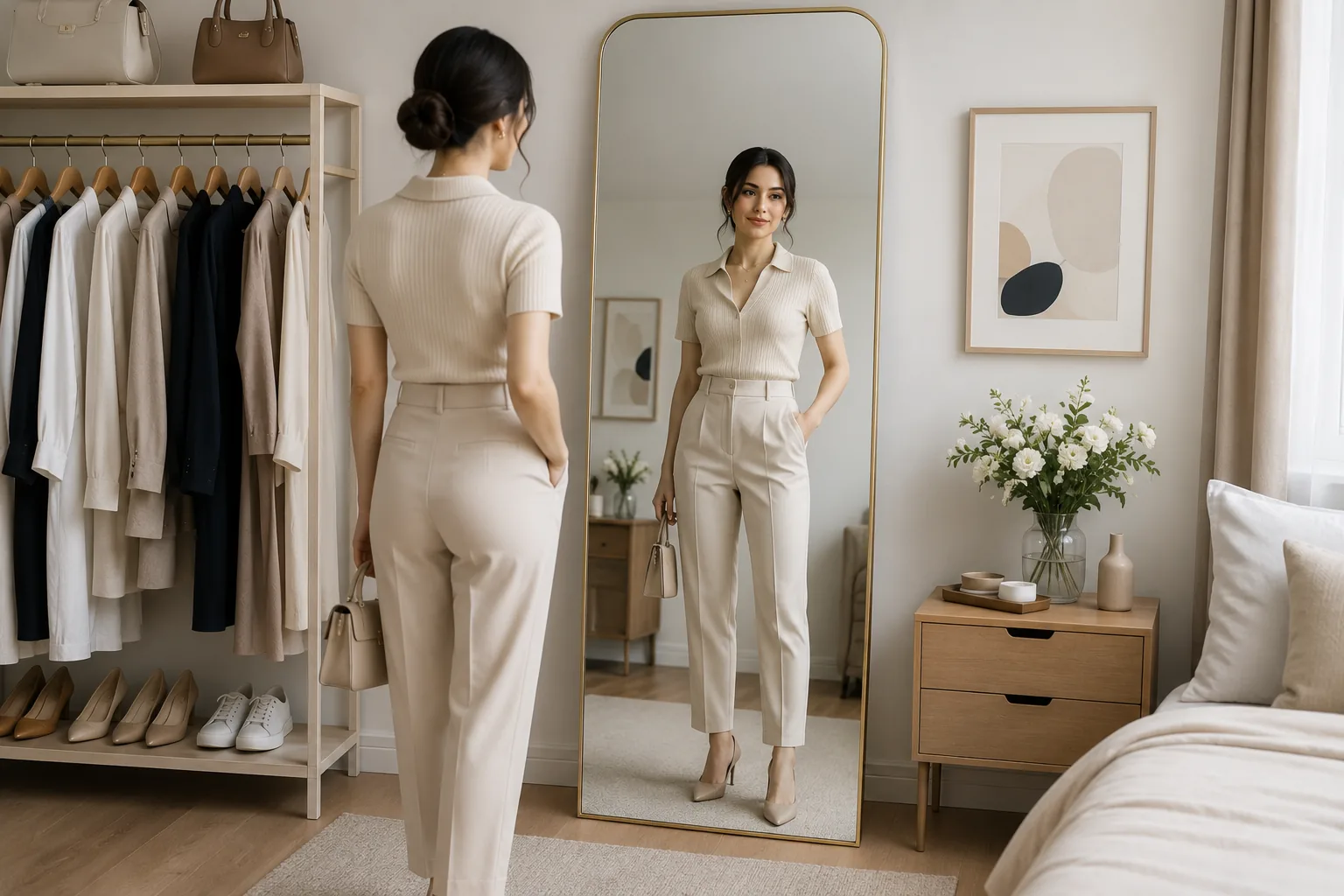
Petite is a proportion problem in the clothes, not in you
Petite conventionally means about 163 centimetres — five foot four — and under, at any weight and any shape. The daily friction is not your height; it is that standard clothing is drafted for frames ten centimetres taller, so sleeves swallow hands, rises sit low, knee-length hems arrive mid-calf and shoulder seams slide down the arm.
Once you see it that way, the whole subject relaxes. You are not dressing to disguise shortness — you are correcting garments that were never drawn for you, then styling proportion like anyone else. Petite ranges, kidswear crossovers for basics, and above all alteration do the correcting. The styling levers — line, waist, scale — come after, and they are optional the way all style is.
One line, head to toe
The single strongest petite lever is the unbroken vertical. Every horizontal seam, contrast waistband and colour change cuts the frame into shorter segments; every continuous line stretches it. In practice:
- Tonal and monochrome outfits — top and bottom in one colour family, all-black being the effortless classic
- Matching shoe to trouser or tight — the leg line runs into the floor
- Open long layers in the same tone as the inner column
- Low-vamp shoes and nude-to-you heels that extend rather than interrupt the ankle
None of this is camouflage — a five-foot column of rust or navy simply reads taller and more deliberate than the same pieces in three fighting colours.
Raise the waist, free the legs
Where the waistband sits decides how long your legs read. High-rise trousers, jeans and skirts move the visual leg-start upward several centimetres at a stroke; a front tuck does the same for any top; cropped jackets ending at or above the waist keep tailoring from swallowing the torso. Empire seams and short kurtis over slim bottoms repeat the trick in other registers.
Volume needs an anchor on a smaller canvas: wide-leg trousers work beautifully worn high and hemmed to skim the shoe, and oversized shirts work balanced over something slim. Full-length everything oversized has less frame to hang from — if you love that look, keep one point of definition and let the rest billow on purpose.
Scale the details to the frame
Garment details are drawn for average height, and on a petite frame oversized details read louder: lapels climb toward the shoulder seam, giant totes approach luggage, maxi prints show two repeats. The fix is scale, not abstinence. Narrower lapels, smaller collars, finer stripes, prints whose motif fits in your palm, delicate-to-medium jewellery, neat crossbody bags — each sits in proportion and lets you, rather than the hardware, be the subject.
Heels are strictly optional equipment. They lengthen the line, and so do the flat alternatives above; a petite frame in well-hemmed trousers and clean flats out-dresses one teetering unwillingly. Wear height for joy, never as an entry fee.
The tailor and the petite rail
Shop the petite section where it exists — the rise, sleeve and shoulder are re-drafted, not just shortened — and expect the fit difference to be immediate. Where it does not exist, buy for shoulders and hips and budget the tailor into the price: hems, sleeve shortening and waist nips are trivial jobs that convert standard clothing into effectively made-to-measure. Have trousers hemmed to each pair's shoe height, sleeves to the wrist bone, skirts to the knee point you actually like.
Alteration is the difference between wearing clothes and clothes wearing you, which is most of what fit means. A petite wardrobe that fits precisely does not read short; it reads exact — and exact is the scarcer look.