 SKIBDRIP®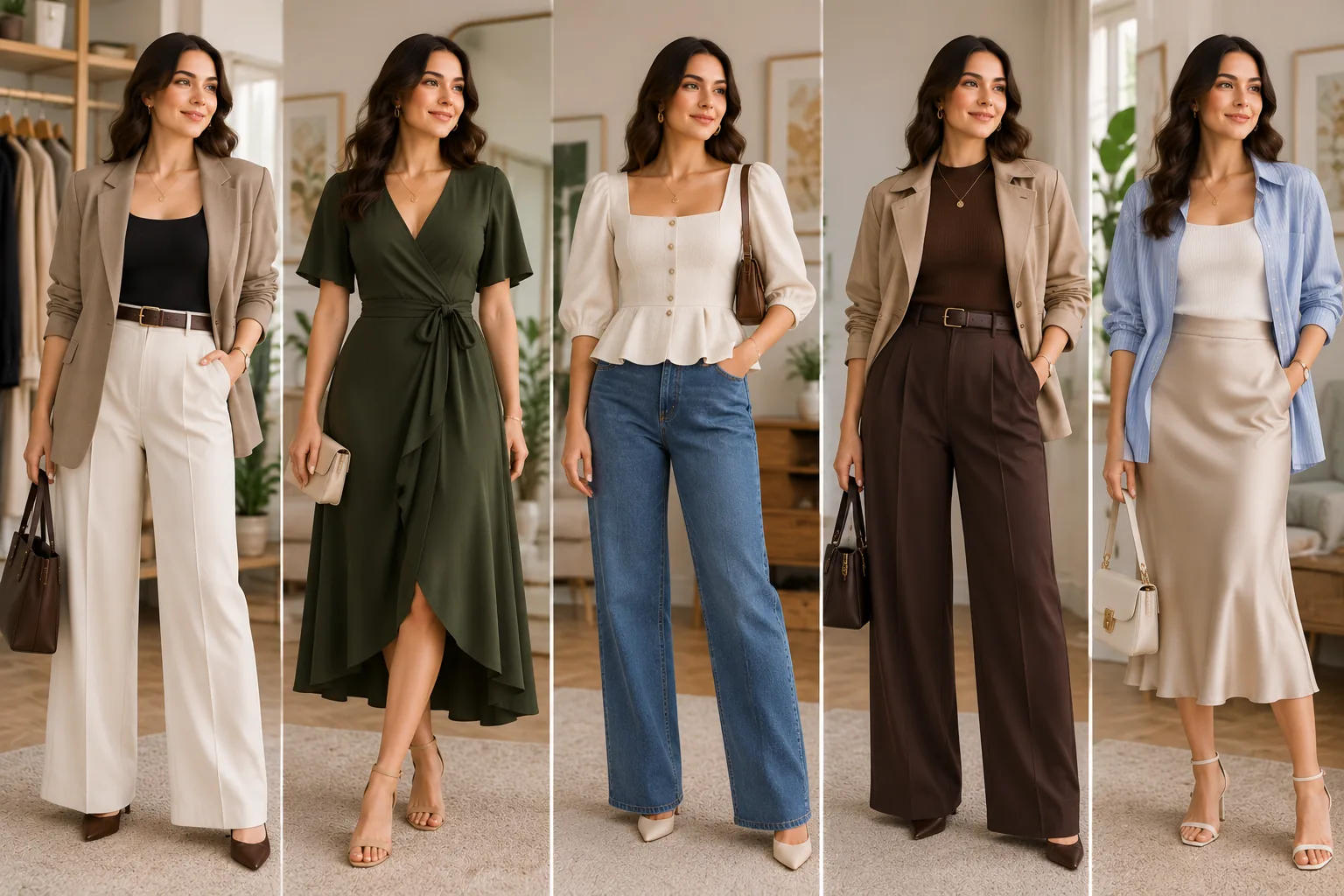
The straight frame is a designer's favourite
A rectangle — sometimes called athletic or straight — has shoulders, waist and hips within a few centimetres of one another. Before any styling advice, notice something: this is the proportion most clothing is actually drafted on, and the one runway samples hang from. Clothes fall cleanly on a rectangle; drape drapes, pleats swing, oversized reads architectural rather than engulfing.
So the frame is not missing anything. The honest styling question is directional: do you want to wear the line as it is — sleek, modern, column-like — or borrow curves for a day? Both are fully available, which is a freedom other proportions work harder for. The sections below are the levers; the choice each morning stays yours.
If you want a waist: belts, wraps, seams
Definition on a straight frame is created rather than revealed, and the tools are cheerful about it. Belts are the fastest — cinching a shirt-dress, a long cardigan or a blazer conjures a waist in one motion, and the contrast between straight frame and sudden cinch looks deliberate and sharp. Wrap dresses and tops angle fabric across the torso, drawing diagonals where the eye expects them. Seamed tailoring — darted shirts, princess-seamed jackets — builds gentle curve into the garment itself.
Two placements work: the natural waist, or higher under the ribs for leg-lengthening drama. What defeats the effect is a half-hearted middle — limp fabric hovering at the waist defines nothing; either cinch with intent or skip it with intent.
If you want curve: place volume on purpose
Curves are an optical effect, and rectangles apply them wherever wanted:
- Hips: peplum hems, pleated and gathered skirts, paperbag waists, cargo and patch pockets, bias-cut slips that swing
- Shoulders and bust: structured shoulders, puffed sleeves, breast pockets, cowl and gathered necklines, ruffles
- Both at once: fit-and-flare dresses — fitted through the middle, generous above and below — instant hourglass grammar on a straight frame
The craft is placing volume at one or two points and keeping the rest quiet, so the additions read as silhouette rather than bulk. A puff-sleeve top over a gathered skirt with a cinched waist is a complete transformation; the same pieces under a boxy jacket cancel each other out.
Layering and texture are the quiet levers
Straight frames layer better than anyone — extra pieces add dimension without fighting existing curves — which makes layering the rectangle's everyday tool rather than a winter chore. An open shirt over a fitted tank, a cropped jacket over a longer layer, a waistcoat, a slung jumper: each layer adds a horizontal or diagonal line that breaks the column and builds shape from cloth alone.
Texture works the same shift: ribbed knits, corduroy, tweed, crochet and quilting create visual depth on a frame that shows fabric honestly.
One guideline keeps it crisp — vary the lengths. Three layers ending at three different points build architecture; three layers ending together build a box.
Or lean into the line
The rectangle's signature move needs no borrowing at all: the column. One colour or close tones head to toe, clean straight tailoring, a longline coat over a matching inner — the unbroken vertical reads tall, deliberate and quietly expensive, and it is the look minimalist brands photograph on exactly this frame. Slip dresses, straight trousers with a fine knit, boxy jackets worn as pure geometry: all of it sits naturally on you.
So treat the levers as a wardrobe, not a diagnosis — column Monday, cinched Friday, curved for the wedding. Knowing your proportions just means every one of those outfits is a decision. On a rectangle, most decisions happen to hang beautifully.