 SKIBDRIP®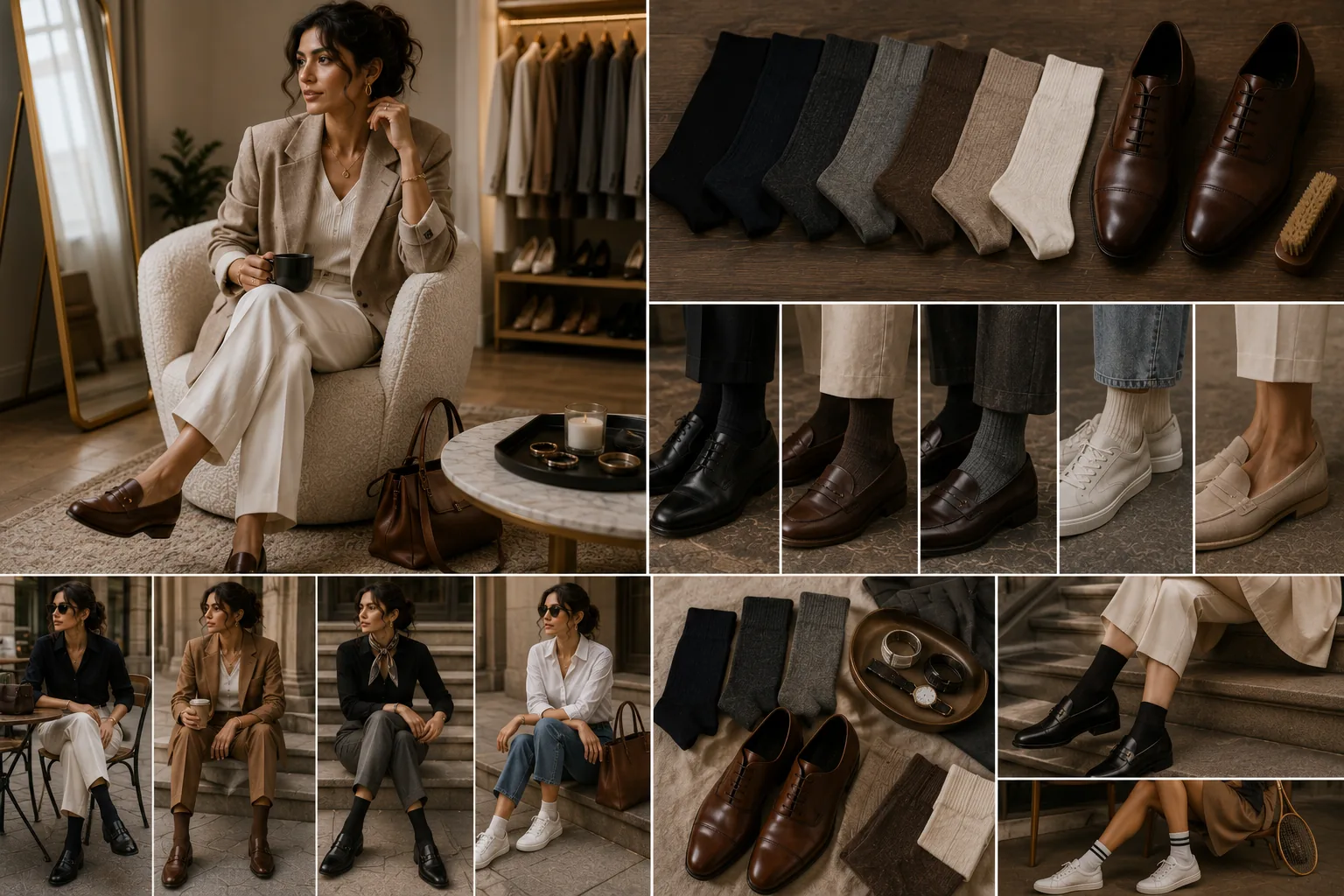
The flash zone
Standing still, socks barely exist. Then you sit, and ten centimetres of ankle appears between hem and shoe — in meetings, at dinners, cross-legged on sofas, exactly when people are close enough to notice.
That flash is why socks punch above their price. A fine navy sock under grey trousers passes unremarked, which is the point; a slouched white sport sock under the same trousers is remembered. Socks are the cheapest item in the outfit and among the most frequently glimpsed — a ratio worth exploiting. Once you start noticing other people's socks, you never stop; assume the same eyes on yours.
Match the trouser, not the shoe
The classic rule, and it still works: socks continue the trouser, not the shoe. Navy trousers, navy-family socks; grey with charcoal; black with black. The leg reads as one unbroken line into the shoe, which sits cleaner and, incidentally, lengthens the leg.
Matching socks to shoes instead chops the line at the ankle. Exceptions exist at the casual end — with jeans, mid-grey and navy socks are universal donors — but when unsure, darker than the trouser and quieter than both is the reach that never misfires. Weight has a rule too: fine socks for fine trousers, substantial socks for denim and boots.
The formality ladder
Socks carry formality as clearly as shoes do:
- Tailoring: fine-gauge, mid-calf, in navy, charcoal or black — mid-calf because a flash of bare shin under a suit undoes the whole effort
- Smart casual: quality cotton crew socks in muted colours or subtle patterns
- Casual: honest crew socks; white finally allowed, and currently fashionable with loafers and wide jeans in a deliberately retro way
- Sportswear: cushioned sport socks — which belong nowhere above this rung
The recurring crime is rungs apart: gym socks under suit trousers. Distance on this ladder, more than colour, is what eyes catch.
Summer and the no-show
Loafers, cropped trousers, boat shoes and shorts want the sockless look — and bare feet inside leather shoes want blisters and permanent odour. The answer is real no-show socks: low-cut, with silicone heel grips, in a breathable cotton blend. Not ankle socks peeking over the edge — genuinely invisible.
Buy several identical pairs; they vanish in the laundry as effectively as on feet. In monsoon months, carry a spare pair — wet socks are misery — and let fast-drying synthetics take over from cotton when the sky is honest about its plans.
What good socks are made of
Fabric decides whether the rules are pleasant to follow. Cotton-rich blends with a little elastane cover most days; mercerised cotton or cotton lisle gives the fine, dressy finish tailoring wants; merino earns its price in both directions — warm in winter, breathable and odour-resistant in heat. Pure synthetics belong in sport, where their wicking is the point.
Fit matters more than people admit: a sock that slides breaks the whole look every hour, and one that grips too hard leaves its autograph on your ankle. Buy your actual size, not the three-sizes-in-one pack. Retire socks when the elastic dies or the heel thins to a shadow — a fresh pair costs less than the impression a collapsed one makes.
Socks as the deliberate accent
Once the rules are automatic, socks become the wardrobe's cheapest personality slot. A flash of burgundy under grey flannel, mustard ribs above white trainers, a fine stripe under raw denim — one glimpse of intent per stride.
Two constraints keep it sharp: echo a colour that already exists elsewhere in the outfit, and allow one statement per ankle zone — loud socks or loud shoes, never both. Novelty prints answer a different question. Done right, the sock accent is the finishing-touch principle at its most affordable. Start with one pair in a colour you love and count how often it earns a comment.